
How understanding my brain helped me stop feeling broken and start wanting to be alive
⚠️Trigger warning: This story mentions suicidal thoughts, self-harm, and emotional overwhelm. If you are not in the right headspace to read that today, please take care of yourself first. If you’re struggling, please reach out to someone you trust or a mental health professional.
The years I thought something was wrong with me
There were years—many long and heavy years—when waking up felt like a punishment. What made it confusing was that, from the outside, things looked “normal”. My grades were usually quite good, I always had people to work with on assignments, and I certainly wasn’t rejected by everyone. But at the same time, I was often bullied. Not brutally, but consistently enough to remind me I was “different”. My skin and body, my hair, my voice, and even my expressions were always up for comment. People told me I looked too somber (resting b!*#$ face was already a thing, unfortunately), or too surprised. It was subtle enough that life appeared fine, yet constant enough that I never felt like I truly belonged anywhere. It created this quiet ache—this feeling that everyone else got the manual for being human… except me.
I didn’t have the language or understanding for it then, but I lived in a constant state of fear and overwhelm. It felt like I was always bracing for something, like I couldn’t do or get anything right; friendships slipped away, relationships didn’t last, and I could never keep up with the world or with the expectations placed on me—not at home, not at school, not socially, and certainly not emotionally. And because I didn’t know why I was always struggling, I assumed the problem had to be me. That something was wrong with me for even feeling this way.
What suicidal thought actually felt like
My environment slowly taught me to believe that my pain meant I was ungrateful, spoiled, or broken. And when I talked about the things I sensed or saw, especially the spiritual things, I was told I might be possessed. Instead of a psychologist, I was taken to a priest. It made me feel like I wasn’t safe with others. But I wasn’t safe alone either. The overwhelm was constant and lived in my mind and my body, and it devoured my nervous system. I started to hurt myself because I didn’t know what else to do with the pain. And the truth is, suicidal thoughts didn’t feel like wanting to die. They felt like not knowing how to keep living.
The pain and suffering felt like:
- A loneliness so deep it felt physical
- Constant exhaustion
- Sensory overload that made everyday tasks like homework unbearable
- Feeling misunderstood, even by myself
- Believing everyone else was doing better than I was
- Being convinced my existence was a burden or a mistake
When I look back now, I realize I wasn’t trying to escape life… I was trying to escape the overwhelm. I wasn’t broken, I was drowning; and nobody could see it. All they saw was a young girl seeking attention when “nothing was wrong”. But the truth is that everything was wrong, they just couldn’t see it from the outside or understand it when I tried to explain it
The Diagnosis that changed everything
When I finally learned I’m autistic—and combined that with knowing I also have ADHD and dyslexia—everything clicked. For the first time in my life, the last 30-ish years actually made sense. It wasn’t that I was failing at life. It was that I was trying to live a neurodivergent life without knowing I was actually neurodivergent. I had been drowning without a name for the body of water.
Diagnosis didn’t magically fix everything, but it provided me with a map. It gave me direction and a way to navigate life without blaming or shaming myself.
I now understood:
- Why I couldn’t keep up with a 9-5 no matter how hard I tried
- Why I was always sick and exhausted, even when I took supplements or “did everything right”
- Why things like fluorescent lights, noises, and crowded or loud spaces destroyed me
- Why my body constantly felt tense, wired, or shaky
- Why sleeping 8-9 hours a night still left me tired
I wasn’t lazy, dramatic, tired, or weak. I was in an autistic burnout: a constant state of fight or flight that no amount of sleep or “positive thinking” could solve.
Learning I was autistic didn’t just explain the past… It set me free from it.
The slow rebuild
Understanding my diagnosis didn’t instantly make life easier, but it gave me something I didn’t have before: permission
Permission to rest.
Permission to say no.
Permission to exist.
Slowly, I began rebuilding my life in a way that worked for my brain, my body, and my nervous system, and not the version of me everyone else expected. I started to notice things I had ignored for years: how crowds drained me within minutes, how much trauma my body had held onto, how certain textures give me the ick, and how masking had become automatic, even when I was alone.
With the help of my doctor, my neuropsychologist, and the few people close to me, I began making changes. I literally moved to an environment that allowed me to breathe, even though it was triggering as f*ck at first. Because suddenly I was alone and had to face myself in every meal, every bill, every mirror, every responsibility, every job, every errand, every single overstimulating moment.
But that also meant that I could move at my own pace: sleep when I needed, eat when and what my body asked for, take breaks without guilt, and create routines that nourished me instead of breaking me.
I learned the concept and power of slow living; to feel the morning sun on my skin, to move my body every day, to sip tea while listening to the birds, to take long pauses, to allow myself to dance in the rain, and to sit with myself, in silence. And somewhere between the quiet mornings, the alone time, and the unlearning of decades of people-pleasing… It hit me:
“I’m not difficult. I’m not dramatic. I’m not too much.
I’m simply… Different. And I am allowed to be!
And just like that, for the first time in my life, solitude didn’t feel like punishment. It felt like home.
Why I’m glad I failed stayed
Survival used to feel like something I did by accident, but now it feels like a choice I make with my whole chest. Waking up no longer feels like a punishment or a chore. Now it feels like an opportunity:
Another chance to breathe.
To feel the wind on my face.
To give and receive love.
To move my body.
To make art.
To rest.
To simply be.
I know it might sound crazy, but once I understood my neurodivergency, I stopped fighting myself. I stopped trying to fit into shapes and places that were never meant for me. And the more I allowed myself to be different, the more I began to fall in love with being alive.
I love exploring new ideas. I love writing—like this moment right now. I love watching TV and letting my brain rest (and sometimes even rot). I love being alone without feeling lonely. I love doing nothing sometimes and not feeling guilty about it. I love feeling connected to Spirit and embracing parts of myself I used to be scared of. I love using art to release old pain—through poetry, performance, film or drawing—and knowing that my story might help someone else feel less alone. Maybe even seen.
No, it’s not all daisies and sunshine…
I still struggle sometimes, especially with things like community. Autistic burnout doesn’t disappear overnight, and connection requires time and presence; two things I’m still learning to give to myself gently.
Most of my energy these days goes into sustaining myself; watering my own soil, fertilizing my own garden, harvesting my own fruit. And for the first time ever… That feels like enough.
I can look in the mirror and say, “Hey Tit, I love you, and it’s so good to see you today!” No matter what I look like. No matter what I did or didn’t accomplish.
Life feels meaningful now because it’s no longer full of “musts”, it’s now full of wants. Full of desire, softness, and a future I genuinely want to be here for. Whatever it looks like.
Sometimes I look back at the younger versions of me—Lil’ Titi (which would’ve been a dope rap name, if you ask me)— and all I want to do is hug her and say, “I’m sorry, dushi. You didn’t deserve any of that, but I’m glad you stuck around.” Because the person I am today is someone you wouldn’t even recognize, but you’d be proud to meet.
What I want you to know. Yes, YOU!
If you’re reading this and any part of my story sounds familiar—the overwhelm, the confusion, the loneliness, the feeling that something is “wrong” with you—I want you to know this:
There is nothing wrong with your existence.
You are not dramatic.
You are not weak.
You are not too much.
You are not attention-seeking.
You are not broken.
You might just be overwhelmed.
You might just be misunderstood.
You might just be… different, and not yet have the language for it.
And you deserve support, compassion, and someone who listens. You deserve the chance to understand your own mind, not fight against it.
If you’re unsure where to start, talk to someone you trust. This can be a friend, a teacher, a coach, a counselor, or a parent if it feels safe. If you’re a minor, let an adult know that you need help; even if it feels scary, even if you worry you’ll upset them. And if the adults around you don’t understand right away? It doesn’t mean your pain isn’t real. It means you need someone who can understand—your general practitioner (huisarts), therapist, school counselor, or another person who can guide you toward the right support. And if you need to call 911 because you’re no longer safe with your thoughts or feel like you can’t handle it on your own anymore: DO IT!
You deserve answers. You deserve care. But most of all: You deserve to stay.
You are needed. You matter. Trust me, you really do, you just have to stick around long enough to believe me 😉
—
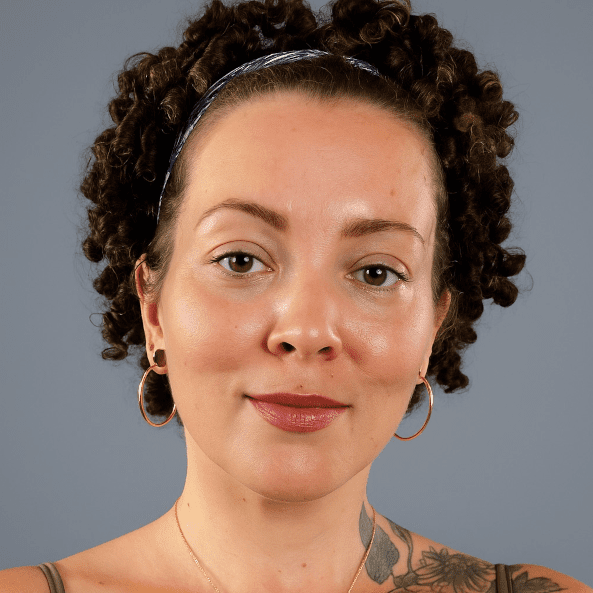
This article was written by Tittel Del Mar, a multidisciplinary artist and storyteller from Curaçao who writes and creates work about neurodivergence, identity, the beauty in the mundane, softness & healing, and is still learning to love her wonderfully wired brain.