How to help someone having a panic attack
A panic attack can look frightening, but a calm and supportive presence can help. A panic attack often reaches its most intense point within minutes. Most panic attacks last between 5 and 20 minutes, although they can last longer.
You do not have to “fix” the panic attack. Focus on helping the person feel supported and on checking whether they need medical help.
What is it?
A panic attack is a sudden wave of intense fear or panic. You can notice it in someone, when:
- they feel like they cannot breathe,
- their heart is racing,
- they feel dizzy,
- they’re shaking,
- they’re crying,
- they feel like they’re losing control
- have pain in their chest
- they think something terrible is happening
If you want to understand more about panic attacks, you can also read: Panic Attacks
What to do
Stay calm and stay with them
Try to stay calm, even when the person looks very scared. Do not leave them alone unless you need to get help or they ask for space. Do not crowd them. Stay nearby, but give them enough space. Speak slowly and use short sentences. You can say: “I’m here with you” “You are not alone” “Let’s focus on one breath at a time”
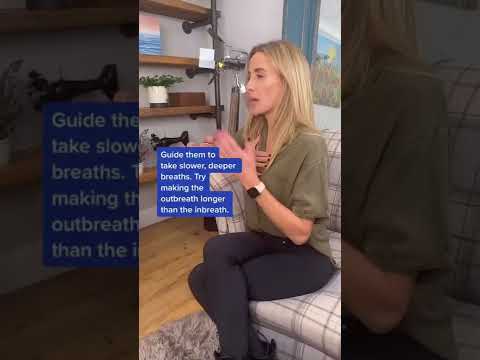
Help them slow their breathing
You can gently guide them to breathe slowly. Do not force them to take deep breaths. Try saying:
- “Breathe in gently”
- “Now breathe out slowly”
- “Let’s make the out-breath a little longer”
You can breathe with them so they can follow your rhythm. Be kind if it doesn’t work immediately. If focusing on breathing makes them more anxious, stop and try a simple grounding questions (like below) instead.
Help them focus on what is around them
Panic can make someone feel trapped in frightening thoughts or body sensations. Focusing on something they can see, hear or feel can bring their attention back to the present moment. You can try:
- Counting slowly together
- Asking them to press their feet into the floor
- Slowly moving your hand up and down for them to follow
- Asking: “What colour is the wall”
- Giving them a cold bottle or soft object to hold
If they can focus and want to continue, you can try the 5-4-3-2-1 exercise:
- 5 things they can see
- 4 things they can feel
- 3 things they can hear
- 2 things they can smell
- 1 thing they can taste
Do not pressure them to finish.
Move to a calmer place
If the place is loud, crowded or overwhelming, ask if they want to move somewhere quieter. You can say:
- “Would it help to move somewhere quieter, or would you rather stay here?”
- “Shall we sit somewhere calmer?”
Do not force them to move if they feel unable to.
Ask what would help
During panic, it can be difficult to answer a big question like: “What do you need?” Giving two simple choices may be easier:
- “Would you like me to stay close, or give you a little more space?”
- “Would you like me to hold your hand, or would you rather not be touched?”
- “Would you like to stay here, or move somewhere quieter?”
- “Would you like help with your breathing, or would you rather focus on something you can see?”
Do not touch them without asking. During panic, touch can feel overwhelming for some people.
What not to say
- “Calm down”
- “Stop overreacting”
- “There is nothing wrong”
- “You are embarrassing yourself”
- “Just breathe”
- “I’m here with you.”
- “We can take this one moment at a time.”
- “You do not have to explain anything right now.”
- “Would you like some space, or would you like me to stay?”
- “What would feel most helpful right now?”
When to get extra help
- Has severe chest pain (especially if it feels tight or spreads to the arm, neck or jaw)
- Is gasping, choking or unable to speak normally because they cannot breathe
- Loses consciousness or does not respond to you
- Has weakness or numbness on one side of the body
- Suddenly becomes stiff and then has repeated jerking movements
- Might hurt themselves or someone else
After the panic attack
- “Is there anything I can do for you?”
- “Do you want to talk about what happened, or do you just want to rest?”
- “Would it help to contact someone you trust?”
- “What helped you the most?”
- “Was there anything I did that did not help?”
- “If this happens again, what would you like me to do?”